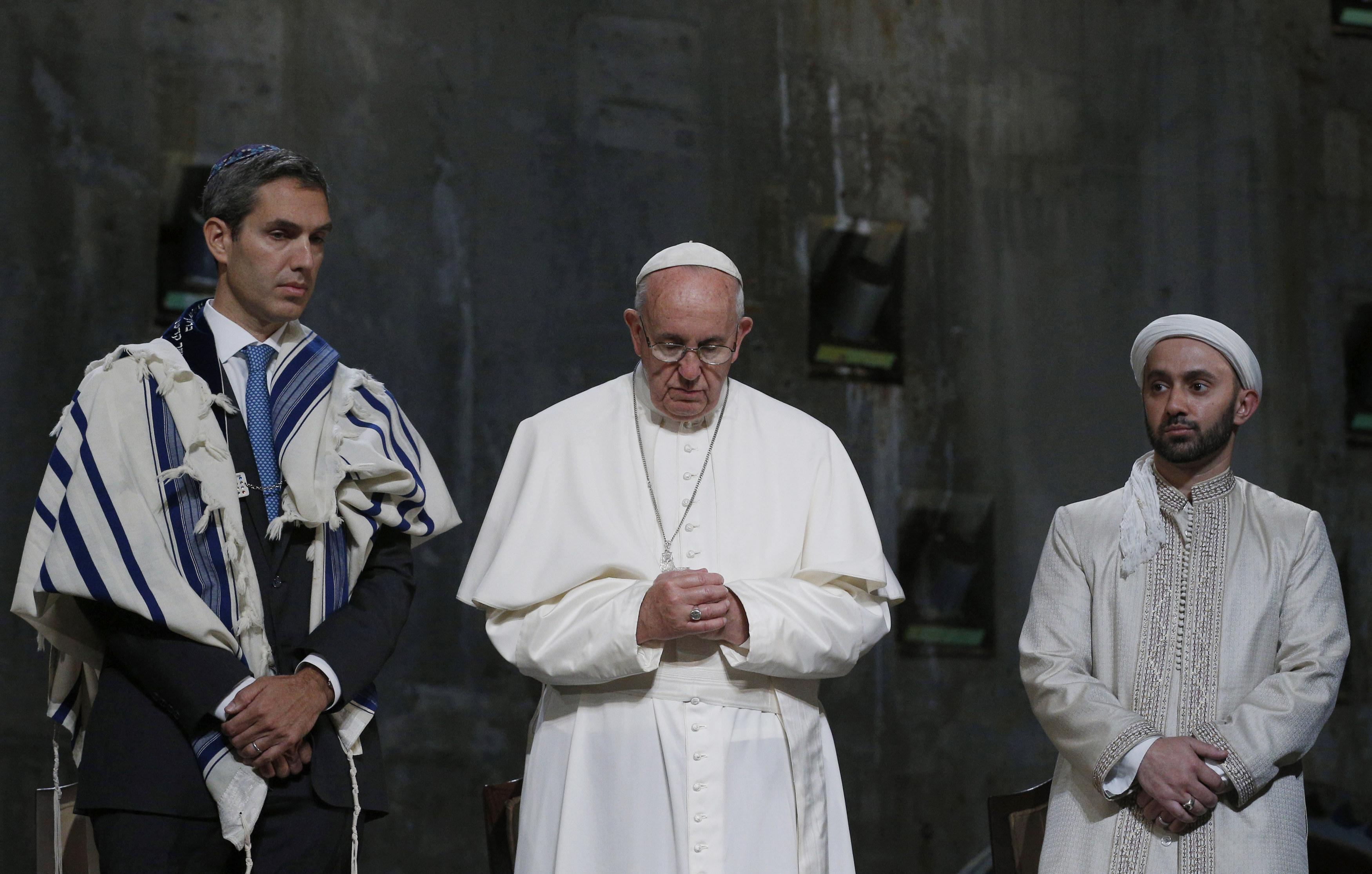
In recent times, the Catholic Church has witnessed significant discussions and debates regarding its approach to various matters, including the relationship with other religions, most notably Judaism. Central to such discussions is the interpretation of conciliar documents, especially in the context of dialogues with traditionalist groups such as the Society of St. Pius X (SSPX).
The Challenge of Reconciling Traditions
The tension between the longstanding traditions of the Church and the developments that emerged from the Second Vatican Council (Vatican II) have delineated a clear divide. As Archbishop Joseph Augustine Di Noia, newly-appointed Vice-Prefect of the Vatican’s Ecclesia Dei, underlines, the dialogue with the SSPX has not been straightforward, particularly concerning views on Judaism.
SSPX's Stance on Judaism
Despite years of dialogue, there appears to remain a lack of understanding within the Vatican regarding the SSPX's position on Judaism, as Archbishop Di Noia implies in his interview. However, the SSPX's stance is unequivocally aligned with the Church's historical teaching - that the Old Covenant is superseded by the New and that salvation lies within the Catholic Church.
Modern Judaism and the Church's Shift
What Di Noia describes as a "fundamental change" in the Church's approach towards Judaism, post-Vatican II, is a significant pivot from this stance. This new orientation, championed by figures such as Pope John Paul II and Pope Benedict XVI, presents an ecumenical lift in acknowledging the distinct role of Judaism within salvation history, a concept that challenges the traditionalist perspective.
Di Noia's Admission About the SSPX and Conciliar Thinking

Perhaps one of the most striking admissions from Archbishop Di Noia's interview is the revelation that discussions with the SSPX serve not merely for reconciliation, but fundamentally to shift their thinking to align with conciliar doctrines. This denotes a strategic patience aimed at gradually shaping the traditionalists' acceptance of the post-conciliar Church's teachings.
The Doctrine of Salvation and Judaism
Facing this doctrinal intersection, the Church finds itself juggling the infallible pronouncements of its past councils with newer ecumenical relationships. Traditionalists hold fast to declarations like those of the Council of Florence, which unambiguously taught the necessity of unity with the Catholic Church for salvation, a teaching that appears at odds with more recent papal statements fostering a form of partnership with Judaism.
Travel and Faithful Witness
In conclusion, as pilgrims on a spiritual journey, Catholics traverse not only physical landscapes but also the vast terrain of doctrinal teachings and interpretations. As much as physical travel expands our horizons and enriches our understanding of the world, so does navigating through the Church's teachings enhance our comprehension of salvation history. The conversation about Laudato Si's Teilhardian perspective and the SSPX's commitment to tradition is just another leg of the Church's ongoing voyage through faith and time.
Orlando
Cancun
Ogunquit
Galway
Bucharest
London
- Novotel London Canary Wharf
- K West Hotel
- Spa Central London
- 2 Night London Hotel Deals Luxury
- Boutique Hotels Central London England
- List 5 Star Hotels London